
Walk into most pizzerias and you'll spot it right away — a dome-shaped oven, often brick or clay, with a real wood fire burning inside. It looks rustic, almost old-fashioned. But that oven is doing something a standard kitchen oven simply can't: cooking at extreme, live-fire heat that transforms dough in a matter of moments.
So what exactly is wood-fired pizza, and why do so many pizzerias — including ours — insist on cooking this way? Let's break it down.
A wood-fired oven is exactly what it sounds like — an oven heated by burning wood rather than gas or electricity. Traditionally built from brick, clay, or stone, the oven's dome shape is designed to trap and circulate intense heat evenly around the pizza as it bakes, rather than just from below.
This design isn't new. Wood-fired ovens have been used to bake bread and pizza for centuries, particularly in Naples, where the technique for Neapolitan pizza was first developed. The oven itself is part of what makes the pizza what it is.
The biggest difference comes down to heat and time. A wood-fired oven typically burns far hotter than a standard kitchen oven, letting a pizza cook in a fraction of the time — often under two minutes, compared to the 10–15 minutes a home oven needs.
That speed matters more than it might seem. When dough hits that kind of heat, it sets almost instantly. Moisture gets locked inside the crust rather than slowly evaporating over a longer bake, which is part of why a wood-fired crust ends up light and airy on the inside, with a crisp, slightly charred exterior.
"The oven doesn't just cook the pizza — it seasons it. The wood smoke becomes part of the flavour, not just the method."
It's not only about heat — the wood plays its own role. As it burns, it releases natural smoke and aromatic compounds that drift through the oven and settle into the crust while it bakes. That's where the subtle smokiness in a good wood-fired pizza comes from — a flavour note that a gas or electric oven, no matter how hot, can't fully replicate.
The intense, even heat of a wood-fired oven cooks pizza in a fraction of the time a regular oven needs — sealing in moisture and preventing the crust from drying out.
Burning wood releases aromatic compounds that infuse the dough as it bakes, giving wood-fired crust a depth of flavour no gas or electric oven can match.
The dome shape circulates heat evenly around the pizza, creating a crust that's crisp and lightly charred on the outside while staying soft and airy within.
Wood-fired ovens have shaped how pizza is made for generations — a traditional method that's stood the test of time for a reason.
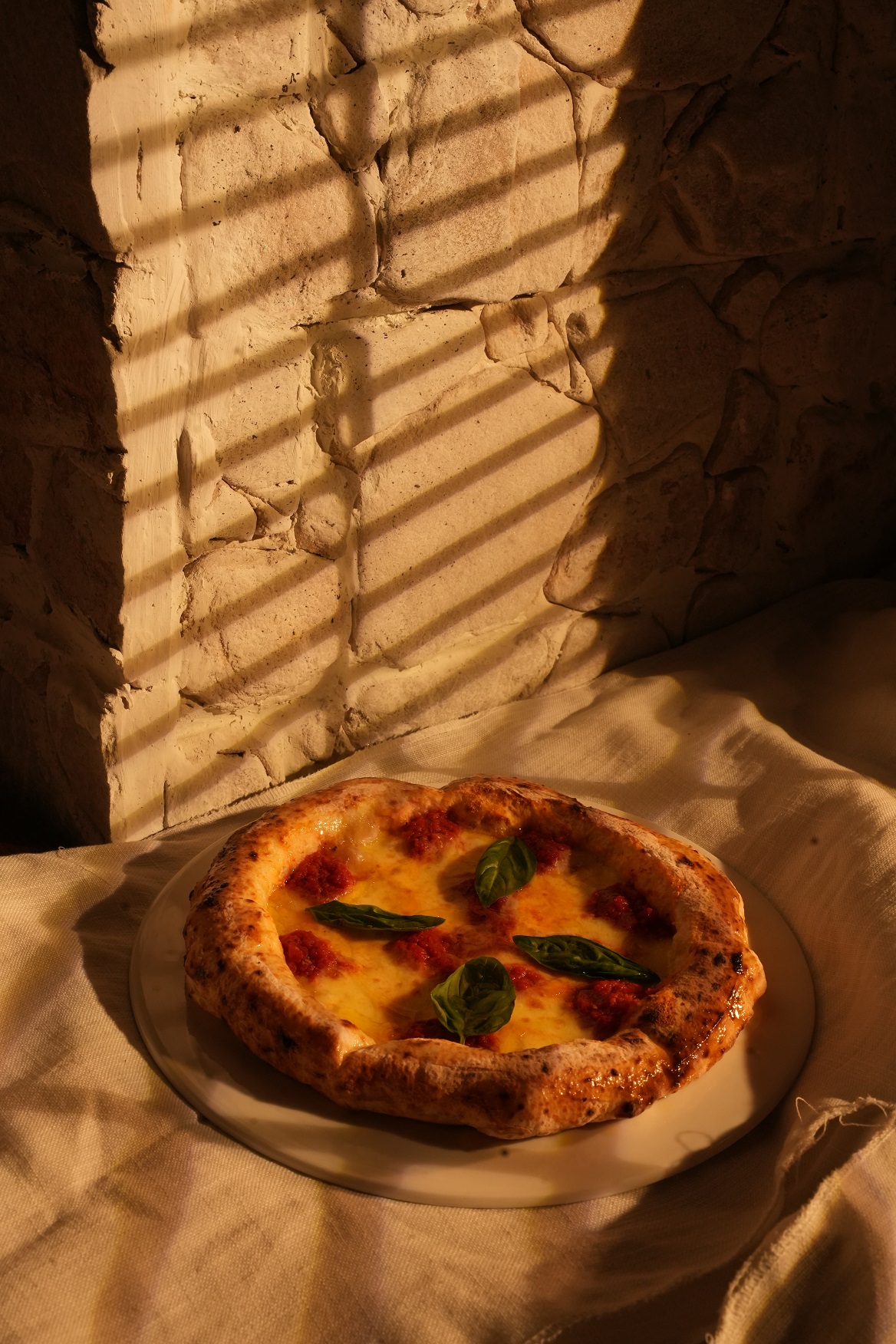
At Eatinn' Love Trattoria, our Neapolitan sourdough and Pala Romana pizzas are baked in a traditional wood-fired oven — the same way it's been done for generations. It's part of what gives our crust its char, its texture, and its flavour.
Explore Our Pala RomanaWhat makes wood-fired pizza different from regular pizza?
Wood-fired ovens reach much higher temperatures than standard kitchen ovens, cooking pizza in a fraction of the time. That intense, even heat gives the crust a crisp, slightly charred exterior while keeping the inside soft and airy — a texture a conventional oven can't fully replicate.
Why does wood-fired pizza taste smoky?
As the wood burns, it releases natural smoke and aroma compounds that infuse the crust while it bakes, giving wood-fired pizza its distinct smoky depth that gas or electric ovens don't produce.
Is wood-fired pizza cooked faster than regular pizza?
Yes. The high heat of a wood-fired oven cooks pizza far faster than a standard oven, which helps the dough set quickly and lock in moisture rather than drying out during a longer bake.