
Not all pizza dough is made the same way. Regular pizza dough leans on commercial yeast for a quick 2–4 hour rise, while sourdough uses a naturally cultivated starter and a long, slow fermentation that can take up to 72 hours. That difference in time and process changes everything downstream — how the dough feels in your hands, how it tastes out of the oven, and how it sits with you afterward.
| Attribute | Sourdough Dough | Regular (Commercial Yeast) Dough |
|---|---|---|
| Leavening agent | Wild yeast & natural bacteria from a live starter | Commercial baker's yeast |
| Fermentation time | Up to 72 hours, slow and cold-proofed | 2–4 hours, fast rise at room temperature |
| Flavour profile | Subtle tang, deeper and more complex | Mild, neutral, straightforward |
| Crust texture | Light, airy, open crumb with a crisp exterior | Denser, more uniform crumb |
| Digestibility | Long fermentation breaks down more gluten & phytic acid | Less time for gluten and phytic acid to break down |
| Additives needed | None — just flour, water, salt and starter | Often relies on commercial yeast and sometimes conditioners |
The long, slow fermentation in sourdough gives natural enzymes and bacteria more time to break down gluten strands and phytic acid — which is why many people find sourdough sits lighter than dough made with fast commercial yeast.
Wild yeast and natural bacteria produce mild organic acids over hours of fermentation, giving sourdough its signature tang — a flavour dimension that fast-rising regular dough simply doesn't have time to develop.
Long fermentation builds an open, irregular crumb structure with pockets of air, giving sourdough crust its light, chewy-yet-crisp character — very different from the denser, more uniform bite of regular dough.
A true sourdough starter needs nothing more than flour and water, cultivated over time. No commercial yeast packets, no dough conditioners — just a slower, more traditional way of making bread rise.
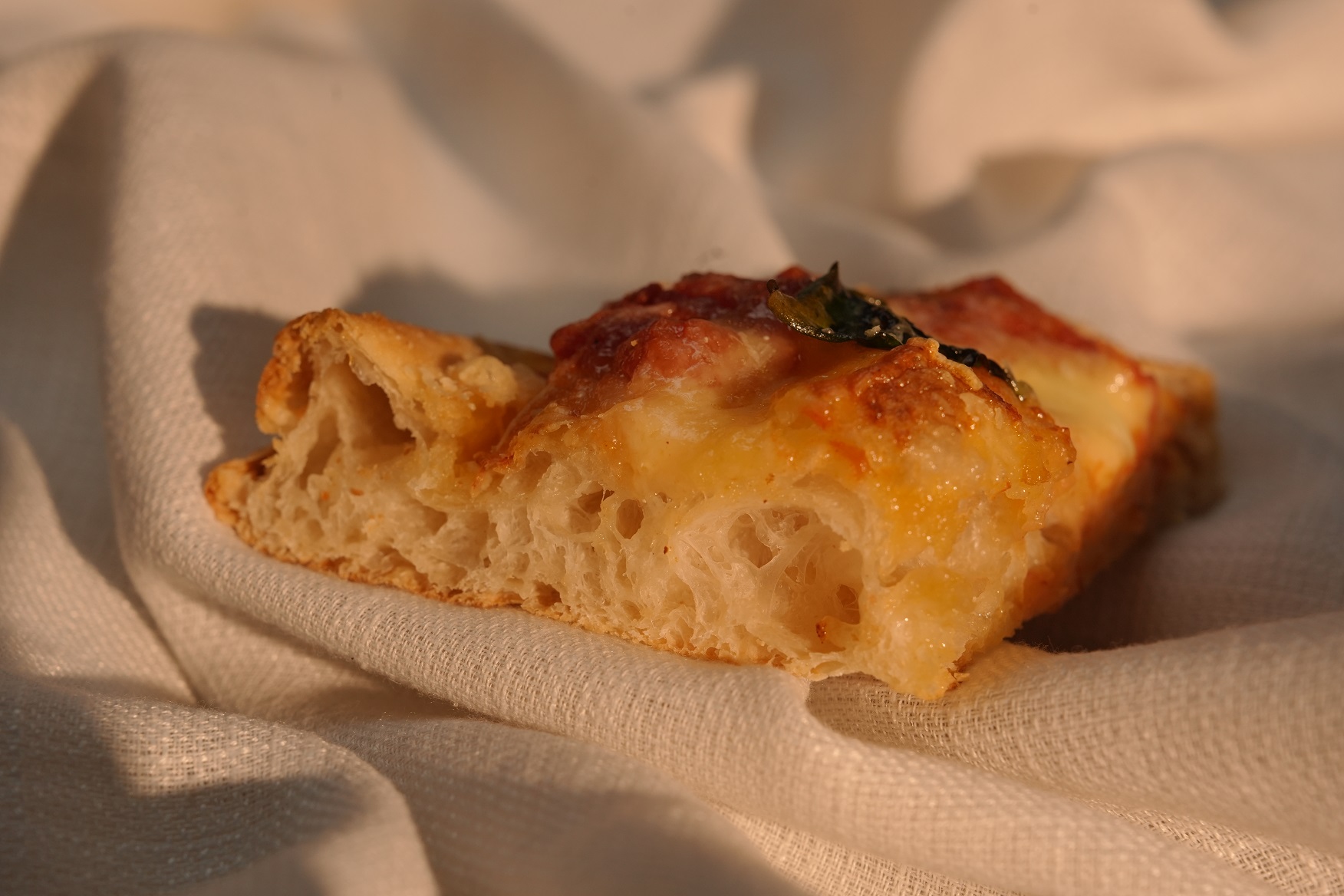
At Eatinn' Love Trattoria, our Neapolitan sourdough goes through a slow, cold fermentation of close to a full day before it ever sees the wood-fired oven. It's a deliberate choice — one that trades speed for flavour, texture, and a lighter dough that's easier to enjoy.
Is sourdough pizza healthier than regular pizza?
Sourdough's long, natural fermentation is widely understood to break down gluten strands and phytic acid more than quick commercial-yeast dough, which many people find easier to digest. It isn't a medical claim, but it's one reason sourdough has a reputation as the gentler option.
Why does sourdough pizza taste different from regular pizza?
The wild yeast and natural bacteria in a sourdough starter produce mild acids over a long fermentation, giving the crust a subtle tang and deeper, more complex flavour that fast commercial-yeast dough doesn't have time to develop.
How long is Eatinn' Love's pizza dough fermented?
Our Neapolitan sourdough is fermented for close to 72 hours before it goes into the wood-fired oven, giving it its signature open crumb, light texture, and easy-to-digest character.
Does sourdough pizza have a lower glycemic impact?
Some research suggests naturally fermented sourdough can have a gentler effect on blood sugar than dough made with commercial yeast, though individual responses vary and this isn't a substitute for medical advice.